
When learning how to draw, there are a few common drawing myths and misconceptions that can hold artists back from even trying. These false beliefs can create unnecessary barriers and make the process seem more daunting than it is. So I want to dismantle some of the most common myths about learning to draw that I’ve heard, and show you why they shouldn’t stop you from pursuing your goal of learning to draw.
Myth 1: “You Need Talent to Be Good at Drawing”
Perhaps the most pervasive misconception in the art world is that you need talent to be good at drawing. This suggests that drawing is an ability you’re either born with or not.
Drawing is a skill, just like any other, and it can be learned and improved through practice and proper guidance. A natural aptitude for certain abilities may give some individuals a head start. However, in comparison to committing to practising foundational techniques, experimenting, and putting in the time to hone your craft, it falls short. When you approach drawing with an open mind and dedication, progress becomes inevitable.
For example, visual spatial skills will improve the more you observe and practice. Then an eye for creating striking compositions will develop the more you familiarise yourself and describe compositional techniques used by other artists. There are methods you can learn to improve the fundamentals, like proportions, line work and shading in a drawing. Start by practising some drawing exercises in a sketchbook to begin to improve the core skills of observation and visual-spatial awareness, more advanced skills will begin to slot into place.
Myth 2: “It’s Too Late to Learn to Draw”
People often say that drawing is best learned at a young age. While it might be easier to internalise certain skills and processes faster when we’re young, there are particular processes and methods that are more advanced and are suited to acquiring as an adult and later in life.
Since creating the Drawing Fundamentals course, I have had people of all different age groups sign up. On the community, where people share their progress and ask for feedback on their drawings, I’ve seen incredible progress from students of all age ranges, despite some people being complete beginners later in life.
Art is a lifelong endeavour, and many successful artists picked up drawing later in life. For example, did you know that the majority of Van Gogh’s most famous works were completed in the last few years of his life?
Adults have many advantages when learning to draw, as they have had a lifetime to build up other supporting skills that can help with learning to draw, like fine motor skills, the ability to grasp more complex fundamental theory and the discipline that is required when acquiring expertise. They also have more refined and specific interests which can help with creating a unique voice and style.
Myth 3: “You Need to Be Able to Draw from Imagination”
Being a good artist isn’t defined by being able to put pencil to paper and quickly whip up a refined drawing using only memory or imagination with no reference material.
What I find interesting about seeing other artists work, is finding out about the process that they underwent to create their pieces. Often, when you look at an impressive finished artwork, there would likely have been an exhaustive process and lots of time spent on that one piece, with multiple references, corrections and some composition planning to get the perspective and proportions looking right.
Drawing from imagination is certainly a skill that can be developed, but it’s not a prerequisite to becoming a competent artist. Start by observing and replicating what you see, and over time, you’ll find that your creative instincts will naturally grow.
Artists that create works that appear imaginative, original and unique often compile many references together. For example, if an artists were to draw a fantasy scene that includes figures, buildings or nature, they may have first compiled a mood board of different references, to make sure that the anatomy and proportions of the figures looked correct and for reference of what different plants or landscapes look like in different lighting conditions. Then they would probably continue the process by creating a composition sketch, deciding upon the direction and type of light source and then creating the structure of the drawing, with the correct perspective and proportions.
This is the process that I teach in depth in the Drawing Fundamentals course, that involves using reference material to create realistic portrait drawings and has seen many students progress from zero knowledge to creating beautiful artworks.
Myth 4: “Good Artists Never Make Mistakes”
Many beginners are intimidated by the idea of mistakes, as if professional artists create flawless works from start to finish. The reality is that even the most skilled artists encounter challenges, make errors, and make adjustments throughout their creative process.
Often, you don’t get to see how a successful artist’s polished final piece was put together, so you might assume that the drawing process itself looked perfect all the way through. This is not always the case, as many successful artists make mistakes as they go. It’s not about how many mistakes you made during the drawing process, but about whether you identified these mistakes correctly and made the appropriate changes to improve the artwork.
Mistakes are one of the most effective learning tools in drawing. They help you identify areas for improvement and refine your techniques. Rather than fearing mistakes, welcome them as part of the artistic process. Every misplaced line or skewed proportion brings awareness to your practice and helps you to become more efficient and accurate at drawing.
In my Drawing Fundamentals course, I show artists how to check and asses their drawings for mistakes and equip students to be able to measure proportions more accurately. This accelerates the learning process, by giving artists the skills to self critique. Another approach that I teach, that can help artists avoid making uncorrectable mistakes is to gradually build up darker areas of the drawing. By starting with light lines and spending time checking the proportions and measurements of these lines, artists can ensure that they have a strong structural foundation in their artwork before shading. This means less erasing in the later stages of the drawing when you’ve already committed to rendering darker shadow tones.
Myth 5: “You Can’t Learn Without Expensive Materials”
Another common misconception is that expensive materials are necessary to create worthwhile art. Beginners might feel deterred by the cost, thinking they need a full set of tools before they can begin.
Drawing doesn’t require a big financial investment, it’s one of the cheaper art mediums to learn. All you need to get started is a couple of pencils, some paper, and an eraser. I recommend getting softer pencils with a hardness rating of around 6B so you can create darker shadow tones. Then I also suggest getting archival quality paper, that is thicker in weight, for final pieces. However, these supplies are relatively inexpensive. Check out the Drawing Tools post for more recommendations of what to get.
It’s not the tools that make you an artist, but the dedication to practicing and improving skills. Over time, as you become more comfortable, you can explore additional materials, but they are by no means essential.
Myth 6: “You Need Formal Art Training”
Contrary to popular belief, formal art training from a recognised institution is not a prerequisite for becoming a skilled artist. While formal training can be beneficial in some cases, many accomplished artists are self-taught or have learned through online resources and practice.
Courses like the Drawing Fundamentals course teach similar principles and techniques to prestigious ateliers, at a fraction of the cost. Through comprehensive online instruction and the community, it’s accessible for anyone to learn at their own pace.
The accessibility of tutorials, art communities, and self-guided study has empowered countless individuals to develop their artistic talents without attending a traditional art school.
Break Down These Barriers
These misconceptions about drawing, whether it’s the myth of talent, age limitations, the need for perfection, or reliance on expensive tools, can discourage you from getting started with learning to draw. Drawing is a skill that anyone can learn with practice, patience, and a willingness to try.
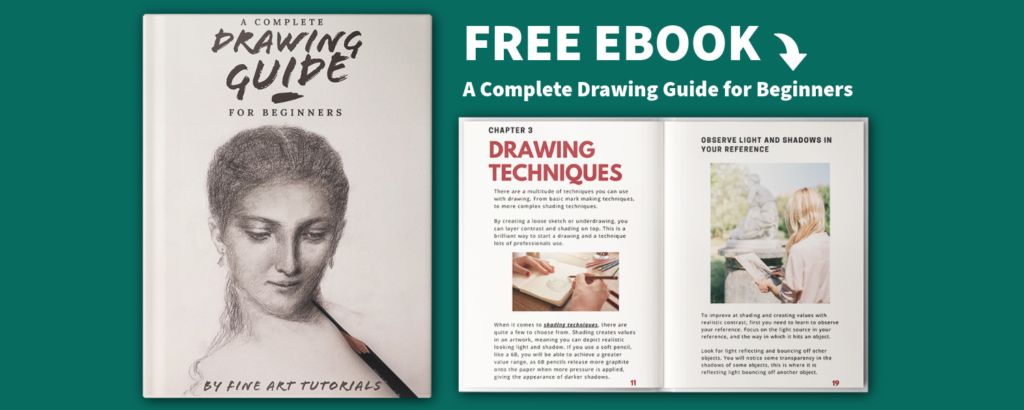
If you’ve been hesitant to pursue drawing because of these myths, it’s time to rethink your assumptions. The Drawing Fundamentals course is here to guide you, breaking those barriers and showing you how to develop your skills step by step. Alternatively, sign up to get the free Drawing for Beginners eBook!